Showing posts with label chile. Show all posts

Thursday, January 22, 2015

THE MEANING OF INTERNATIONAL TRADE UNIONISM

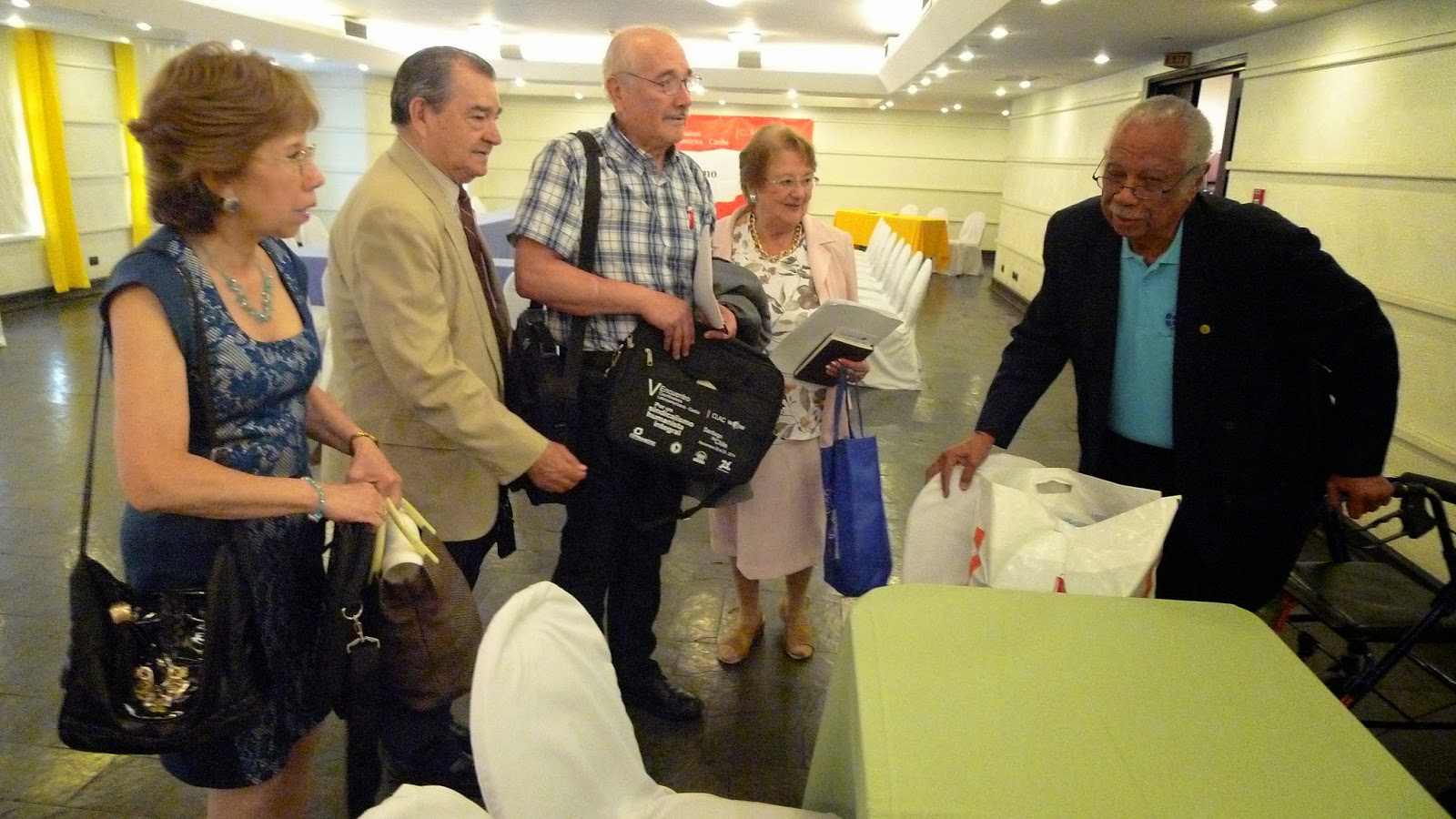
A happy reunion at breakfast.

International trade union seminars are serious, tiring and sometimes boring. A whole day of sitting, listening and debating is never easy, but for trade unionists it is very difficult. Nevertheless, there is laughter, jokes made and celebration of friendship and collegiality. This can be seen in the pictures of the international trade union seminar of the Latin American Coordinadora consisting of three trade union sector Federations ( banks and insurances, journalists, commerce and informal economy), all member of the International World Organization of Workers WOW. The seminar took place in the Chilean capital Santiago.


Besides the professional training, seminars strengthen the links between the trade union leaders who live and work scattered throughout the huge continent of Latin America and the Caribbean. Maybe this function of strengthening mutual bonds between trade union leaders is as important as the training function of such seminars. Contrary to Europe, trade union work in Latin America and the Caribbean is still difficult, arduous, not recognized by Governemnets or Employers and sometimes even dangerous.

Picture with instructions


In many countries you have to dare because sometimes trade union work can be very dangerous work. Not so much life threatening, which unfortunately occurs too often, but mostly because authorities and / or employers threaten you, intimidate or create other ways to make your work difficult or even impossible. In such difficult times it is good to have not only colleagues in your own country but also abroad. You know that like you, they are going on with their work in spite all these problems.


Such international seminars therefore works encouraging and motivating. You know you are not alone. There are others, friends and colleagues who support you. In case of emergency, they are also willing to set up international support actions. The latter makes international trade union activities very important.

A selfie made by someone else 


Despite or perhaps because of the severity of the meetings and seminars, there is also time for friendship and fun. Relaxing not only from the daily trade union work, but also from the seminar itself. Because on such seminars one talks about uncomfortable topics such as unemployment, the impact of the global economic crisis, the growing informalisation of the economy, the breakdown of social services, the uneven distribution of incomes, the poor social dialogue with employers and government etc. etc. It is for the participants important to learn about what solutions trade unions from other countries have or what experts can teach you about the problems. All this together are valuable experiences and information that you can use in your own country.

It is not always exciting what you hear.


Such seminars are of course expensive. Just only the flight tickets are already expensive in such a vast continent as Latin America. Then there are the accommodation costs and expenses for the seminar itself. Especially translation systems and translators make a seminar extra expensive. In Latin America, where Spanish and Portuguese speakers usually understand each other without a translator so you do not need translation systems. That is why costs are lower than for example for a European seminar. Even the trade unionists from Curacao and Aruba speak fluent Spanish.

A hug (abrazo) among qualified eyes during graduation


In Europe, the European Commission gives grants for the high translation costs, as well as payment of travel and subsistence expenses and the hiring of experts. In Africa, Latin America and Asia, such arrangements do not exist at all. So there the participating unions themselves have to pay the costs or appeal to the international trade union movement.

A hug for everybody


Usually it is a combination of both: self-financing and financial support from the international organization. For example, the participating unions pay the travel expenses of their representatives to the place of the seminar. The local trade union, which does not have travel expenses, pays all or part of the hotel costs. The international trade union adds to this budget what is still needed. The international trade union therefore is the axis around which operates the international trade union network which makes possible international seminars and other activities. The international trade union movement is a practical form of international solidarity

Monday, December 15, 2014

FIFTH LATIN AMERICAN-CARIBBEAN COORDINATION MEETING CLAC WOW


The Fifth Annual Latin American Coordination meeting "For an Integrated Humanistic Trade Unionism" took place in Santiago, the capital of Chile, between November 23 - 25. The meeting was organized bij FELATRACCS (The Latin American Federation of Workers in the Communications and Cultural Sectors) together with the Chilean Federation of Workers in the Communication Sectors (FETRACOSE). Some 40 trade union delegates from 14 different countries participated in the meetings and working sessions. Together they represented the three federations FELATRACCS, FELATRABS and FETRALCOS affiliated to the WOW. A special guest was President Oscar Semerel from Curacao of the Latin American Federation of Pensioners CLATJUPAM together with the Chilean Union of Pensioners UNAP A.G. 
The first day was dedicated to remember what happened in Chile during the dictatorship of general Pinochet (1973 - 1990) with a visit to the Museo de la Memoria and to the Circle of Journalists House in Santiago. After these visits on the Sunday morning, every Federation held its own boardmeeting in one of the halls of the hotel.


While waiting for the bus for a visit to the Museum de la Memoria, the first group picture was spontaneously taken in front of the hotel.


The Chilean Museum de la Memoria was founded with the intention that one should not forget
what happend during the Pinochet dictatorship. During the visit everybody received a red rose
that could be placed there where your thoughts go.


After the impressive visit to the Museum de la Memoria we went back to the centre of the city
where we walked along the Moneda Palace and the monument of President Allende
to the Circle of Journalists House.In the meanwhile our Chilean friends told us about the history of the palace and the putch of general Pinochet against the Government of President Allende (1973)

The Government of the democratic elected President Allende of the Unidad Popular Coalition
 was overthrown by the Chilean army led by General Pinochet in 1973. After te fall of the dictator in 1990 the democratically elected Government decided to erect a monument to honor him.

In the House of the Journalists were commemorated all those journalists and other media workers
who were killed or disappeared because of their profession with red roses placed on a special monument in the House that is dedicated to them. 

Preparing the boardmeeting of FELATRABS

Preparing the meeting of CLATJUPAM President Oscar Semerel with the boardmembers of the Chilean pensioners union UNAP A.G.


Monday was largely reserved for a conference in collaboration with the Universidad de Chile. The main theme was "communication, globalization and democracy. "As you can see on the displayed program, two panels were held. The first panel was devoted to "An integrated Latin American trade union movement" followed by a panel on "Perspectives in the exercise of social communication in Chile." The debates and discussions were interrupted by a musical performance by Manuel Sanchez, singer, folk poet, troubadour and guitarist.

After the colloquium the Fifth Coordination Meeting CLAC - WOW was officially opened in one of the meeting rooms in the hotel. Words of welcome were spoken by Abraham Armijo, President of FETRACOSE, José Jesus Trabulho, President of FELATRABS, Maritza Chireno, President of FETRALCOS, Roberto Mejia, President of FELATRACCS, Francisco Iturriaga, President of UNAP A.G., Miguel Duche, Vice President of WOW, The Local ILO representative, Piet Nelissen of the WOW World Board. The Coordination Meeting was officially inaugurated by Minister of labour Francisco Javier Diaz.


Here we see the second panel on "Perspectives in the exercise of social communication in Chile"
with Javiera Olivares, president of the Association of Journalists (left), Laureano Checa,
Director of the School for Journalists of the University of Chile (middle)
and Abraham Armijo (right), President of the Federation of Communication Workers,
Graphic Workers and Related services (FETRACOSE) and
vice president of the Autonomous Confederation of Workers (CAT).

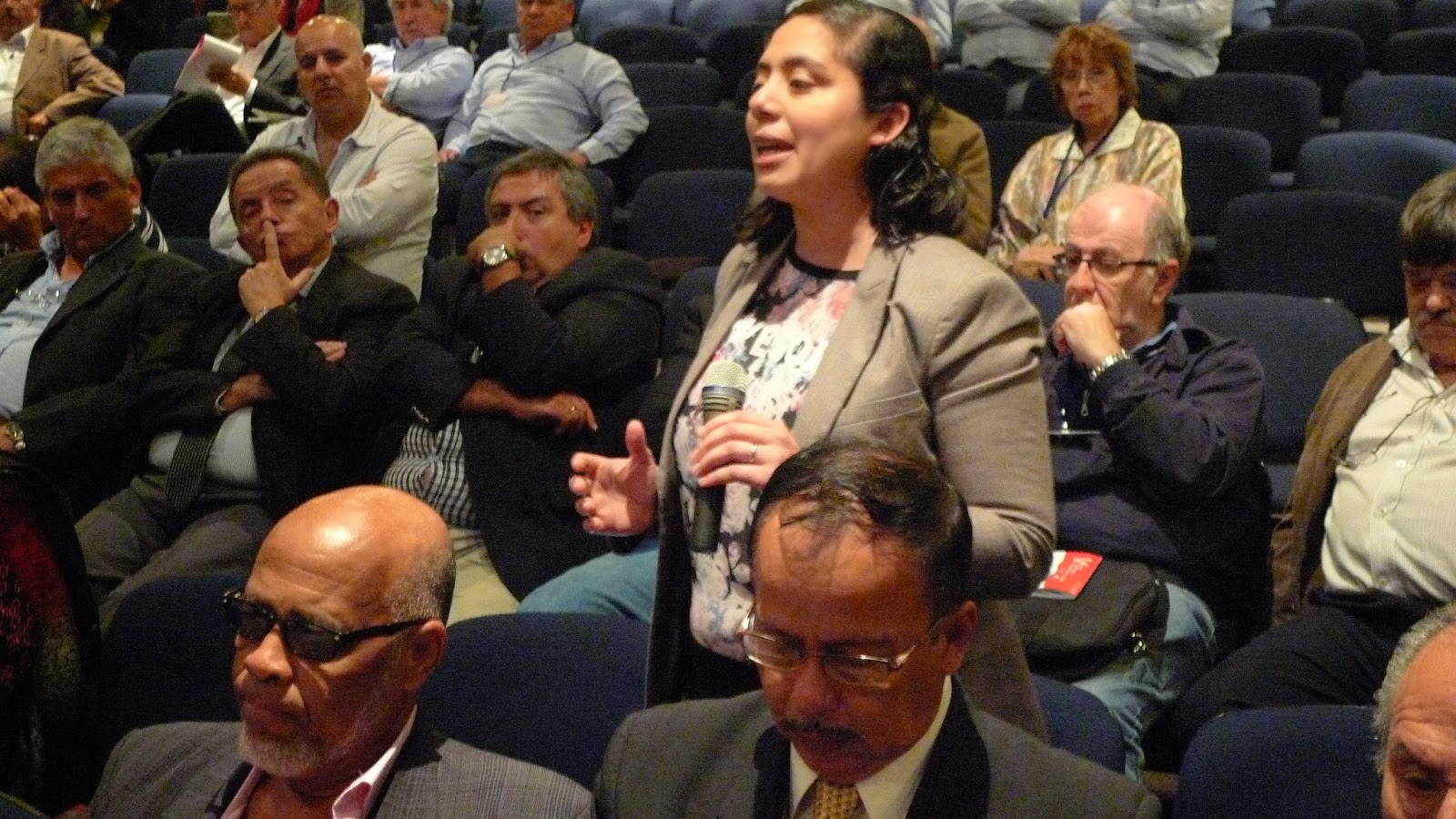
After each panel there was an opportunity for the participants to ask questions and to make observations for debate. Here we see Zuliana Laina from the Peruvian ANP ask some questions to the members of the panel.


Before the opening of the Fifth Coordination Meeting CLAC - WOW the participants had to register themselves officially.

Minister of Labour Francisco Javier Diaz opens officially the Coordination Meeting CLAC WOW.
The participants were invited by the minister for an evening dinner.


The next day, Tuesday November 25th, the meetings took place in Parque La Auraca, a recreational centre for employees of different enterprises. The morning consisted of 4 panales:
1. "The World of Work against Neoliberalism."
2. "Trade Unionism in the XXI century and social crisis."
3. "Autonomous Workers and Trade Union Self Reform."
4. "Women, Youth and new Trade Union Action."
After these panels, 4 Working Shops on the above mentioned items were formed. After the Working Shops had finished their debates, conclusions were made up and presented to all participants. The conclusions will be elaborated as soon as possible and be send to all participants.
Alle participants received a diploma as a proof of participation. The meeting ended with a party.

It was a well organized event for which we thank the companeros of FELATRACCS and especially our Chilean friends of FETRACOSE. With their excellent job, they have set a high standard for the meetings to follow in the next years. The next meeting will be in the Dominican Republic next year.

Panel 3 on "Autonomous Workers and Trade Union Self Reform."


Panel 4 on "Women, Youth and New Trade Union Action."


Registering for the workshops.


A special working shop on "Pensioners and Trade Action" was formed. The pensioners want to become a member of CLAC-WOW.


At the end of a long working day all participants received a diploma as proof of participation.It was a well organized event for which we thank the companeros of FELATRACCS and especially our Chilean friends of FETRACOSE. They did an excellent job putting a high standard for the meetings to follow in the next years.